
MSc Artificial Intelligence
Become unstoppable. Build Intelligent Systems. Responsibly.
The MSc Artificial Intelligence is designed for computing graduates and professionals ready to specialise in AI and its real-world applications. Delivered by Robert Kennedy College in exclusive partnership with the University of Salford’s School of Science, Engineering and Environment, the programme covers recent advances in machine learning, deep learning, natural language processing and big data analytics — the technologies enabling innovative applications in finance, health, energy, manufacturing and marketing.
You’ll learn to use industry-standard methods and toolkits — Python, TensorFlow, Keras, Apache Spark and leading NLP libraries — to design, develop and deploy AI applications that respond to genuine business requirements. Legal, professional and ethical considerations are integrated across every module, so you graduate able to build systems that are not only powerful but responsible. Optional support sessions in Python programming, linear algebra and statistical analysis are offered before the course begins, so every student starts strongly.
Swiss Quality. Since 1998. British Excellence. AI Expertise.
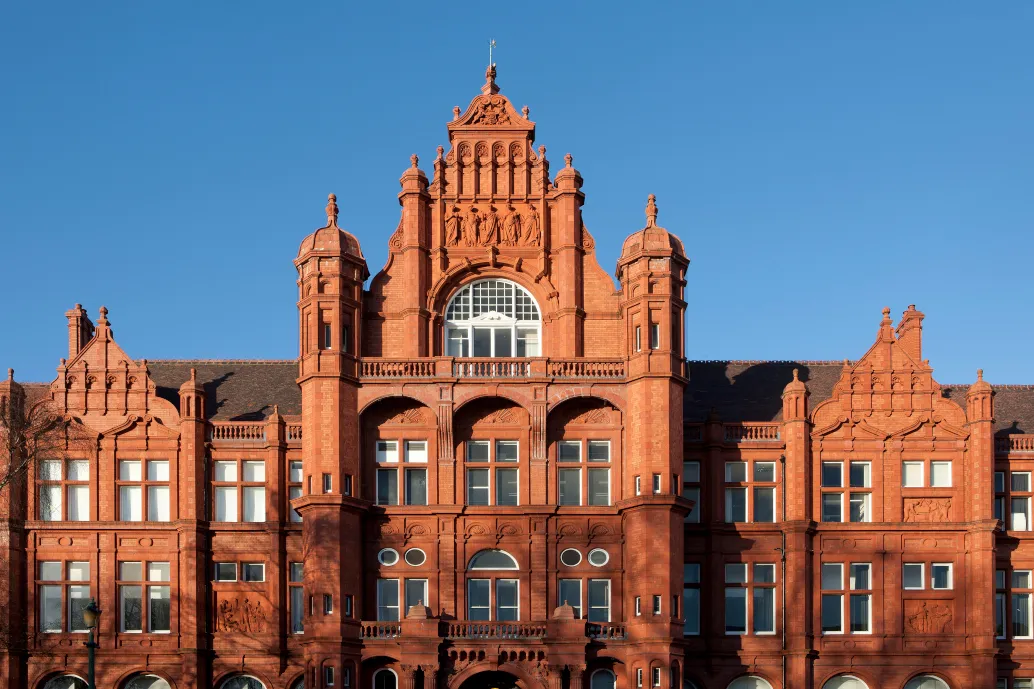
This programme combines the excellence of Swiss-quality online education with the prestige of a British degree from the University of Salford. For over two decades, Robert Kennedy College has been at the forefront of online education, while the University of Salford’s School of Science, Engineering and Environment — with its research-led expertise in artificial intelligence, machine learning and data science — ensures you graduate with a globally recognised and respected qualification.
Why This Programme?
- Cutting-Edge Curriculum: Machine learning, deep learning, natural language processing and big data — the four pillars of modern AI, in one Master’s
- Hands-On with Industry Tools: Python, TensorFlow, Keras, PySpark and NLP toolkits used in practical workshops in every module
- Responsible AI Throughout: Legal, ethical, social and professional issues embedded in the curriculum and the final project
- Fast and Flexible: Complete in as little as 9 months, 100% online via OnlineCampus, in focused six-week module blocks
- Optional Residential Week: One week in Zürich or Salford, Manchester, to prepare your final project — or take the same workshops online
Your MSc Artificial Intelligence degree is:
- Recognised worldwide by employers and industry leaders
- Awarded directly by the University of Salford
- Identical to degrees earned on campus
- Fully recognised by the UK government
Career Outcomes
Graduates are prepared for roles such as:
- Machine Learning Engineer
- AI Engineer / Developer
- Data Scientist
- NLP Engineer
- Deep Learning Specialist
- AI Solutions Architect
- AI Research Engineer
- AI Product Manager
Award-Winning British Education
The University of Salford is a winner of the Queen Elizabeth Prize for Education 2025, recognising the University's pioneering research in sustainable building design and tackling fuel poverty, led by its Energy House Labs.
Part of the United Kingdom's national Honours system (formerly known as the Queen's Anniversary Prizes), the Prize is granted every two years to recognise outstanding work by UK universities and colleges that demonstrates excellence, innovation, and benefit for the wider world.
9 months to 4 years
Online, with an optional residential week in Switzerland or Salford, Manchester.
We offer rolling admissions throughout the year. Register at any time and begin your learning journey immediately.
Full details and currency options are listed on our Tuition Plans & Rates page.
Programme not eligible for UK Government student finance.
Optional residential week
Zürich, Switzerland or Salford, Manchester
Your degree is fully achievable online. But before you begin your final project, you can choose to spend one week with fellow students and faculty - at Robert Kennedy College in Zürich, Switzerland, or on campus at the University of Salford in Manchester, England.
The residential week is built around your Project for MSc. Through workshops, supervisor sessions and peer discussion you will sharpen your research question, settle your methodology, plan your project timeline and leave with a clear roadmap for the dissertation stage. It is also a rare opportunity to meet in person the international cohort you have been studying alongside online, and to experience the two institutions behind your degree.

Programme Outline
Introductory
Not-for-credit
- Induction
This is the first module of the programme which gives an orientation to the course and the online learning style. It does not carry credits, and students are encouraged to go through the material in this module at their own pace and get accustomed to the online medium.
The MSc Artificial Intelligence consists of 180 credits delivered through five modules. All taught modules are core and delivered online in focused six-week blocks:
Stage 1: Taught Modules (120 credits)
- Module 1: Machine Learning and Data Mining (30 credits)
- Module 2: Big Data Tools and Techniques (30 credits)
- Module 3: Deep Learning (30 credits)
- Module 4: Natural Language Processing (30 credits)
Stage 2: Project for MSc (60 credits)
Module 5: Project for MSc (Dissertation) (60 credits)
Exit awards: PgCert / PgDip Artificial Intelligence (International) are available for students who complete 60 or 120 credits respectively.
Module Descriptions
Module 1: Machine Learning and Data Mining (30 credits)
- The full data mining lifecycle, from data preprocessing to exploratory analysis
- Supervised and unsupervised algorithms: association rules, clustering and classification
- Neural networks, ensemble methods and text mining
- Practical activities in Python to extract and interpret insights from data
- Ethical and societal implications of machine learning practice
Module 2: Big Data Tools and Techniques (30 credits)
- Defining characteristics, challenges and opportunities of Big Data
- Cloud computing, distributed processing frameworks and NoSQL databases
- Ingesting, processing, analysing and storing massive datasets
- Hands-on Apache Spark, PySpark and MongoDB on real-world text, image and IoT sensor data
- Machine learning and recommender systems at scale
Module 3: Deep Learning (30 credits)
- Deep learning architectures behind speech and face recognition, sentiment analysis and medical diagnosis
- Feed-forward and convolutional neural networks, and transfer learning
- Sequence models: LSTMs, GRUs and Transformers
- Embeddings (Word2Vec, BERT, GPT) and image segmentation
- Practical development in Python with TensorFlow and Keras
Module 4: Natural Language Processing (30 credits)
- Methods and tools behind chatbots, speech recognition and translation systems
- Tokenisation, parsing, and lexical and distributional semantics
- Text classification, sentiment analysis, information retrieval and extraction
- Neural architectures for NLP, word embeddings and pre-trained models
- Critical examination of bias in language models
Module 5: Project for MSc (Dissertation) (60 credits)
- Independent, research-informed project on a substantive problem in your field
- Robust research proposal and critical review of current practice and the state of the art
- Ethical considerations and appropriate methodologies and technologies
- A 15,000-word dissertation with results, reflections and recommendations
- Supported throughout by a dedicated supervisor